
Managing your digital marketing activities can feel like juggling too many balls at once. Between planning campaigns, creating content, scheduling posts, tracking performance, and coordinating with your team, it's easy for tasks to slip through the cracks or duplicate efforts to waste precious time. For startups and small to medium enterprises, where every hour and pound counts, an inefficient workflow doesn't just slow you down—it directly impacts your ability to grow your online presence and compete effectively. This guide walks you through practical steps to streamline your digital marketing workflow, helping you work smarter, reduce errors, and achieve measurable improvements in both efficiency and results.
Table of Contents
- Key takeaways
- Understanding the digital marketing workflow
- Preparing your digital marketing workflow
- Executing and managing your workflow
- Monitoring and optimising your digital marketing workflow
- How Digital Sphere can help optimise your marketing workflow
- Frequently asked questions
Key Takeaways
| Point | Details |
|---|---|
| Structured workflow saves time | A well structured workflow streamlines planning, execution and review to reduce errors and save time. |
| Automate repetitive marketing tasks | Using digital tools to automate repetitive tasks frees up human capacity for more strategic work. |
| Monitor and optimise workflow | Regular monitoring and optimisation of the workflow ensures issues are caught early and the process improves over time. |
| Clear communication boosts collaboration | Open and clear communication across the team prevents misunderstandings and strengthens collaboration. |
| Consistent execution boosts online presence | Consistent execution across channels maintains a cohesive brand and strengthens your online presence. |
Understanding the digital marketing workflow
A digital marketing workflow is essentially a structured sequence of tasks and processes that takes your marketing activities from initial planning through to execution and analysis. Think of it as your operational blueprint—defining who does what, when, and how across all your marketing channels. For startups and SMEs, this structure becomes critical because you're often working with limited resources and can't afford wasted effort or missed opportunities.
Why does this matter so much? Without a clear workflow, teams face several common challenges that drain productivity. Poor task coordination leads to duplicated work or forgotten responsibilities. Delays cascade when one person doesn't know they're waiting on another's input. Inconsistent outputs damage your brand when different team members apply different standards or messaging. These inefficiencies compound quickly, turning what should be a growth engine into a source of frustration.
A typical digital marketing workflow moves through several distinct phases. Planning involves setting campaign objectives, identifying target audiences, and mapping out timelines. Content creation produces the actual materials—blog posts, social media graphics, email copy, and videos. Scheduling ensures everything publishes at optimal times across your chosen platforms. Monitoring tracks performance metrics in real time so you can spot issues early. Finally, optimisation uses data insights to refine your approach for the next cycle. Each phase connects to the next, creating a continuous loop that improves with every iteration.
The beauty of a well-designed workflow lies in its ability to make complexity manageable. Instead of feeling overwhelmed by dozens of disconnected tasks, you and your team follow a clear path that everyone understands. This clarity reduces stress, improves quality, and ultimately delivers better results for your business.
Preparing your digital marketing workflow
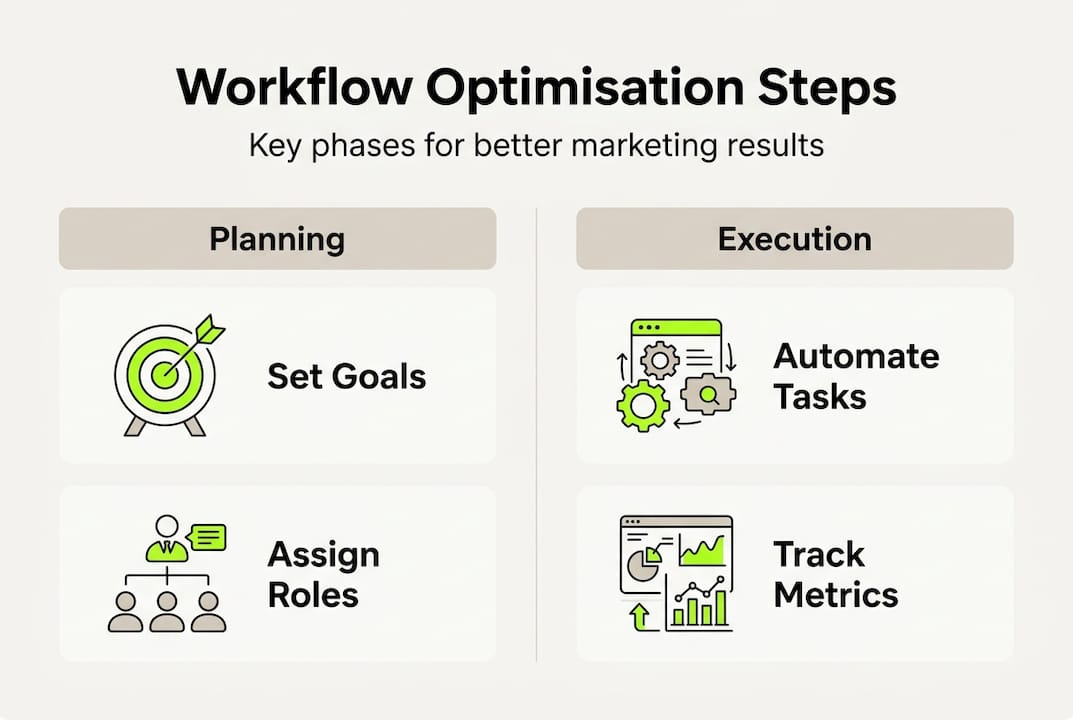
Before you can execute effectively, you need solid groundwork. Preparation determines whether your workflow becomes a genuine productivity boost or just another system that people work around. Start by identifying your core marketing objectives with specificity. Rather than vague goals like "increase brand awareness," define measurable targets such as "generate 50 qualified leads per month" or "achieve 20% engagement growth on LinkedIn within three months." These concrete objectives guide every subsequent decision about tasks, tools, and team assignments.
Next, assign clear roles and responsibilities within your team. Ambiguity here creates bottlenecks and finger-pointing when deadlines loom. Designate who owns content creation, who approves final versions, who schedules publications, and who monitors analytics. Even in small teams where individuals wear multiple hats, explicitly documenting these roles prevents confusion and ensures accountability. Create a simple responsibility matrix that maps each workflow phase to specific team members.
Selecting appropriate digital tools tailored to your business needs streamlines workflow management significantly. The right platforms automate repetitive tasks, centralise information, and provide visibility across your entire operation. Consider tools that cover these essential functions:
- Project management platforms for task tracking and deadline management
- Content calendars for planning and visualising your publishing schedule
- Social media schedulers for automated posting across multiple channels
- Email marketing automation for nurturing leads without manual intervention
- Analytics dashboards for consolidated performance reporting
Pro Tip: Start with integrated platforms that combine multiple functions rather than juggling separate tools for each task. This reduces the learning curve and prevents data silos that make reporting difficult.
Establish communication channels that support smooth task handovers and updates. Whether you use Slack, Microsoft Teams, or another platform, create dedicated channels for different campaigns or workflow stages. This keeps conversations organised and makes it easy to find information later. Set expectations for response times and update frequency so everyone knows when to expect feedback or approvals.
Finally, define measurable KPIs that track workflow success beyond just marketing outcomes. Yes, you care about leads and conversions, but also monitor operational metrics like average task completion time, percentage of deadlines met, and number of revision cycles required. These indicators reveal workflow health and highlight areas needing improvement.
| Workflow element | Tool type | Example metric |
|---|---|---|
| Task management | Project platform | Tasks completed on time (%) |
| Content creation | Collaboration software | Average revision cycles |
| Publishing | Scheduling tool | Posts published as planned (%) |
| Performance tracking | Analytics dashboard | Time from data to insight (hours) |
| Team communication | Messaging platform | Average response time (hours) |
This preparation phase might feel like overhead when you're eager to start marketing, but investing time upfront pays dividends through smoother execution and fewer firefighting situations later.
Executing and managing your workflow
With your foundation in place, execution becomes systematic rather than chaotic. Begin each campaign cycle with a planning session that defines specific deliverables, deadlines, and success criteria. Create a content calendar that maps out every piece of content across all channels for the coming month or quarter. This bird's-eye view prevents last-minute scrambles and ensures balanced coverage across your marketing mix.
Break down your workflow into these sequential steps:
-
Campaign brief creation: Document objectives, target audience, key messages, and success metrics for each campaign. This single source of truth keeps everyone aligned.
-
Content development: Assign creation tasks with clear deadlines and specifications. Include guidelines for brand voice, formatting requirements, and approval workflows.
-
Review and approval: Establish a structured review process with defined turnaround times. Use collaborative tools that allow inline comments and version tracking to avoid email chaos.
-
Asset preparation: Optimise images, format copy for different platforms, and prepare all technical elements needed for publication.
-
Scheduling and publication: Load approved content into your scheduling tools with optimal posting times based on audience behaviour data.
-
Monitoring and engagement: Set up alerts for performance thresholds and assign team members to respond to comments and messages promptly.
Automating repetitive marketing tasks improves productivity and consistency dramatically. Configure your email marketing platform to send welcome sequences automatically when someone subscribes. Set up social media tools to publish your content calendar without manual intervention. Create automated reports that compile key metrics and deliver them to stakeholders weekly. These automations free your team from mundane tasks so they can focus on strategy and creative work that genuinely requires human judgement.
Clear communication during task transitions prevents the most common workflow breakdowns. When one team member completes their portion, they should explicitly notify the next person in the chain rather than assuming they'll check for updates. Use status labels in your project management tool—"In Progress," "Ready for Review," "Approved," "Published"—so everyone can see workflow state at a glance.
Pro Tip: Schedule brief daily stand-up meetings (15 minutes maximum) where team members share what they completed yesterday, what they're working on today, and any blockers they're facing. This regular touchpoint catches issues early before they derail timelines.
Utilise dashboards that provide real-time visibility into both campaign performance and workflow health. Your dashboard should answer questions like: Which tasks are overdue? What's our publication rate compared to plan? Which campaigns are performing above or below expectations? This consolidated view enables quick decisions and prevents surprises.

Regular team check-ins beyond daily stand-ups allow deeper discussion of challenges and improvements. Weekly or fortnightly sessions can review what worked well, what didn't, and how to refine the workflow for the next cycle. Treat your workflow as a living system that evolves based on team feedback and changing business needs.
Monitoring and optimising your digital marketing workflow
Execution without measurement leads nowhere useful. Consistent monitoring and refinement lead to higher online presence and marketing efficiency over time. Start by identifying the right metrics that reveal workflow effectiveness alongside marketing performance. Operational metrics might include task completion rates (percentage of tasks finished by deadline), average time per workflow stage, and number of bottlenecks encountered. Marketing metrics cover the usual suspects: engagement rates, conversion rates, cost per acquisition, and return on investment.
Common workflow pitfalls sabotage even well-intentioned systems. Watch for these warning signs:
- Unclear responsibilities: Tasks fall through gaps because nobody owns them explicitly
- Insufficient automation: Your team wastes hours on repetitive tasks that software could handle
- Poor documentation: Tribal knowledge means only certain people can complete certain tasks
- Lack of regular reviews: The workflow becomes stale and doesn't adapt to new challenges
- Inadequate follow-up: Published content receives no monitoring or engagement
When you spot these issues, address them systematically rather than applying quick fixes that create new problems. Analyse workflow data to understand root causes. If tasks consistently miss deadlines in the approval stage, perhaps you need clearer approval criteria or additional reviewers. If content quality varies widely, maybe your brief templates need more detail or your team needs training.
Comparing manual versus automated approaches reveals optimisation opportunities:
| Workflow aspect | Manual approach | Automated approach | Efficiency gain |
|---|---|---|---|
| Social media posting | Daily manual uploads | Scheduled batch publishing | 75% time reduction |
| Performance reporting | Weekly data compilation | Automated dashboard updates | 85% time reduction |
| Email sequences | Individual sends | Triggered automation | 90% time reduction |
| Content approvals | Email chains | Workflow management tools | 60% faster cycles |
| Lead nurturing | Manual follow-ups | CRM automation | 80% more consistent |
These comparisons aren't just about saving time—automation also improves consistency and reduces human error. A scheduled post never forgets to publish. An automated report never skips a metric.
Implement iterative testing to continuously improve your workflow. Try variations in your process and measure the results. Perhaps moving the approval stage earlier reduces revision cycles. Maybe batching similar tasks improves focus and quality. Test one change at a time so you can attribute improvements accurately.
Encourage team feedback through regular retrospectives. Your team members experience workflow friction firsthand and often have valuable suggestions for improvements. Create a safe environment where people can honestly discuss what's not working without fear of criticism. Some of the best optimisations come from frontline insights rather than management directives.
Set up quarterly workflow audits where you step back and assess the entire system. Are your tools still serving you well or have you outgrown them? Do role assignments still make sense given team changes? Are your KPIs measuring what actually matters? This periodic review prevents gradual decay where small inefficiencies accumulate into major problems.
How Digital Sphere can help optimise your marketing workflow
Implementing everything you've learnt requires both the right tools and expert guidance. Digital Sphere offers comprehensive digital marketing solutions designed specifically for startups and SMEs looking to streamline their marketing operations. Our platforms integrate content management, social media scheduling, and analytics into unified systems that eliminate the tool sprawl plaguing many businesses. You'll access real-time dashboards through our customer portal that provide instant visibility into campaign performance and workflow health without manual data compilation.
Beyond technology, our team provides personalised support to help you design workflows that fit your specific business model and team structure. We've helped dozens of companies transform chaotic marketing operations into efficient systems that scale. For deeper learning, download our marketing workflow optimisation ebook packed with templates, checklists, and case studies you can implement immediately. Whether you need full-service management or just the right tools and training, Digital Sphere becomes your partner in building marketing operations that deliver measurable results.
Frequently asked questions
What is a digital marketing workflow?
A digital marketing workflow is a planned sequence of tasks and processes that guides your marketing activities from initial strategy through execution to analysis. It defines who performs each task, when it happens, what tools are used, and how work moves between team members. Unlike ad hoc marketing efforts where tasks happen reactively, a structured workflow creates repeatable processes that improve efficiency and consistency. The workflow typically includes phases for planning campaigns, creating content, scheduling publications, monitoring performance, and optimising based on results. This systematic approach reduces errors, prevents duplicated effort, and ensures nothing falls through the cracks.
Which tools improve digital marketing workflow efficiency?
Appropriate tools increase marketing efficiency and coordination by automating repetitive tasks and centralising information. Scheduling tools like Buffer or Hootsuite eliminate manual social media posting. Automation software such as HubSpot or Mailchimp handles email sequences without human intervention. Analytics dashboards consolidate data from multiple sources into unified reports. Collaboration platforms like Asana or Monday.com keep everyone aligned on tasks and deadlines. The key is selecting tools that fit your business size and goals rather than adopting everything available. Start with platforms that integrate multiple functions to avoid tool sprawl that creates its own inefficiency.
How can I monitor my marketing workflow performance?
Monitor workflow performance using both operational and marketing metrics. Track task completion rates to see what percentage of activities finish by their deadlines. Measure average time per workflow stage to identify bottlenecks. Monitor campaign ROI and engagement metrics to assess marketing effectiveness. Use dashboard insights that update automatically rather than compiling reports manually. Schedule regular reviews—weekly for tactical adjustments and monthly for strategic evaluation. The goal is spotting issues early when they're still easy to fix rather than discovering problems after they've derailed entire campaigns.
What are common mistakes to avoid in digital marketing workflows?
Avoid unclear responsibilities where tasks lack explicit owners, leading to assumptions and dropped balls. Don't neglect automation opportunities that could eliminate repetitive manual work. Poor communication creates silos where team members work in isolation without visibility into others' progress. Skipping regular reviews allows workflows to become stale and inefficient over time. Failing to document processes means knowledge stays trapped in individuals' heads rather than becoming organisational assets. Finally, resist the temptation to over-complicate workflows with unnecessary approval layers or excessive tool requirements that create more friction than value.